
What is The Zen, in Zen Beds
There’s a state you’ve touched without having a name for it.
You were doing something that took all of you. And at some point the noise went quiet. The commentary — am I doing this right, what would people think, am I enough — just stopped. Time moved differently. Something that’s almost always braced finally let go.
You came back and realised an hour had passed. Or three. You hadn’t noticed. That’s the closest thing to rest a busy mind ever finds. And it’s the reason there’s a “zen” in Zen Beds.
The Self Gets Out of the Way
I’ve felt it growing stronger at the bench for thirty-six years without needing to explain it. There’s a point most mornings, hands working the wood, where the I fades to flow. The process tells me where it wants to go and my hands follow. The part of me that worries and monitors and narrates just isn’t there.
The Japanese call it mushin — “no mind.” Not blank. Just the watcher stepping back so the work can happen. You don’t think your way through a joint. Your hands know. The self gets out of the way, and the power comes through cleaner for it.
That’s the quality you feel in a finished bed — not just the object, but the state it was made in.
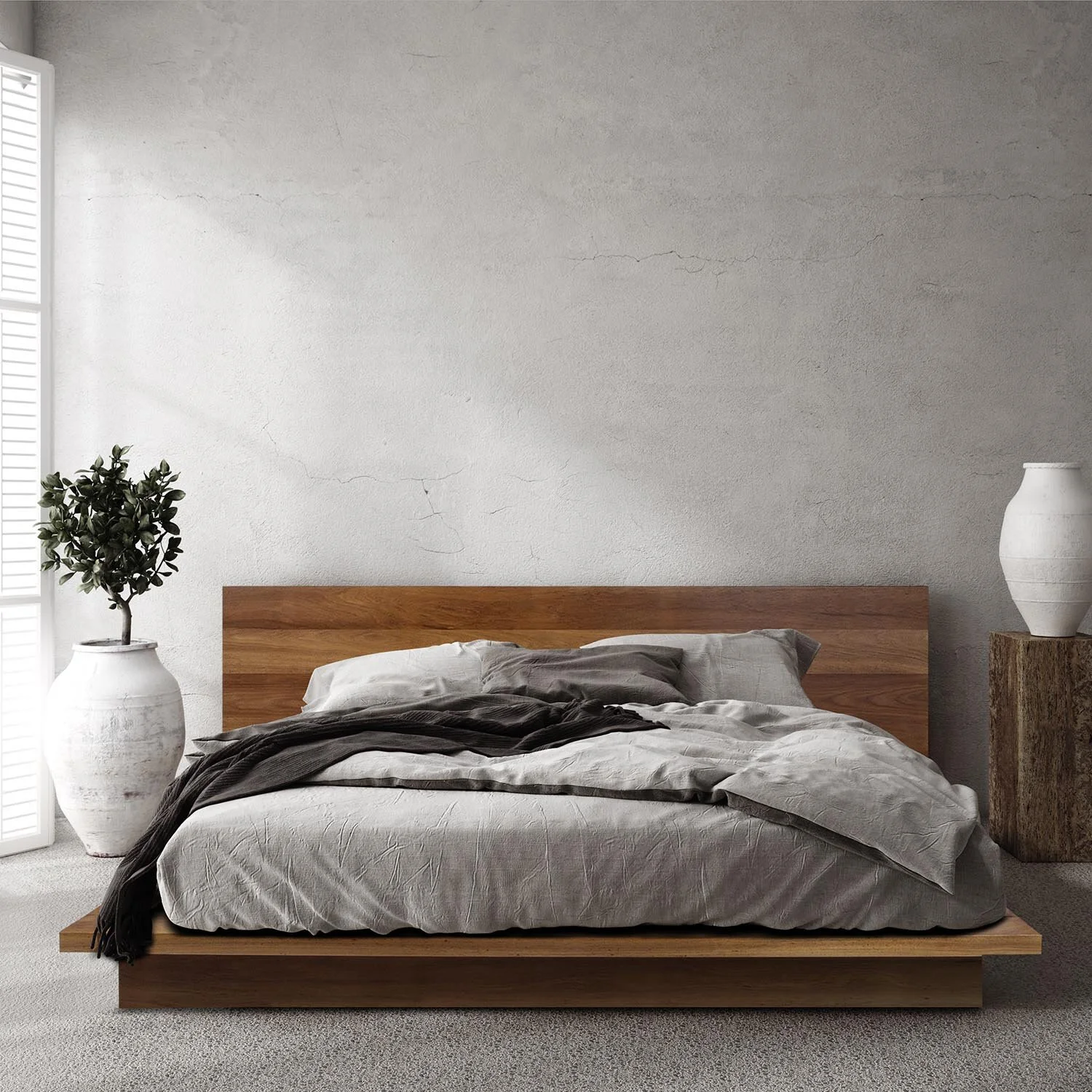
Why It Has to Be Made This Way
You can’t fake your way to that place. The wood knows when you’re rushing. Force a cut, hurry a join, and it shows — a gap, a split, a line that sits wrong forever. The work only comes right when you slow down enough to disappear into it.
So a Zen bed can’t be made the way most beds are made. Foam poured into a mould, stapled, shrink-wrapped, out the door. That’s manufacturing. There’s no one home in it.
By hand it’s the opposite. Timber chosen and worked with attention. Natural latex layered slowly. Organic cotton and wool. It takes longer than it strictly needs to — if speed were the only thing that mattered. But speed was never the point. The attention goes into the thing. You can’t see it, but the body feels it later.
The Same Stillness, Handed On
Here’s what thirty-six years has shown me so far.
There are two ways a person sets the self down. One is the work — losing yourself in something you love. The other is sleep. They’re cousins. Both ask the watchful, over-alert mind to finally stand down. Both are moments you stop performing being a person and simply are.
And both need the same thing first: a body that feels safe enough to let go.
That’s the whole trade, really. I spend my mornings disappeared into the making — the self gone quiet, the hands doing the knowing. And what comes out the other end is a place for someone else to reach the same stillness at the end of their day. A bed clean enough, honest enough, quiet enough that a tired nervous system stops scanning and lets go.
The zen isn’t a brand name I just borrowed. It points to a practised way that has flowed through human hands into an object, to nightly remind the sleeper of deeper inner stillness.
Dan has been handcrafting natural beds for 36 years — first in Brisbane, now from his workshop on the Sunshine Coast.
Sleep Safe. Live Well.